Category: The Plan

  • The Van That Never Left (part 3)- No Pang at All

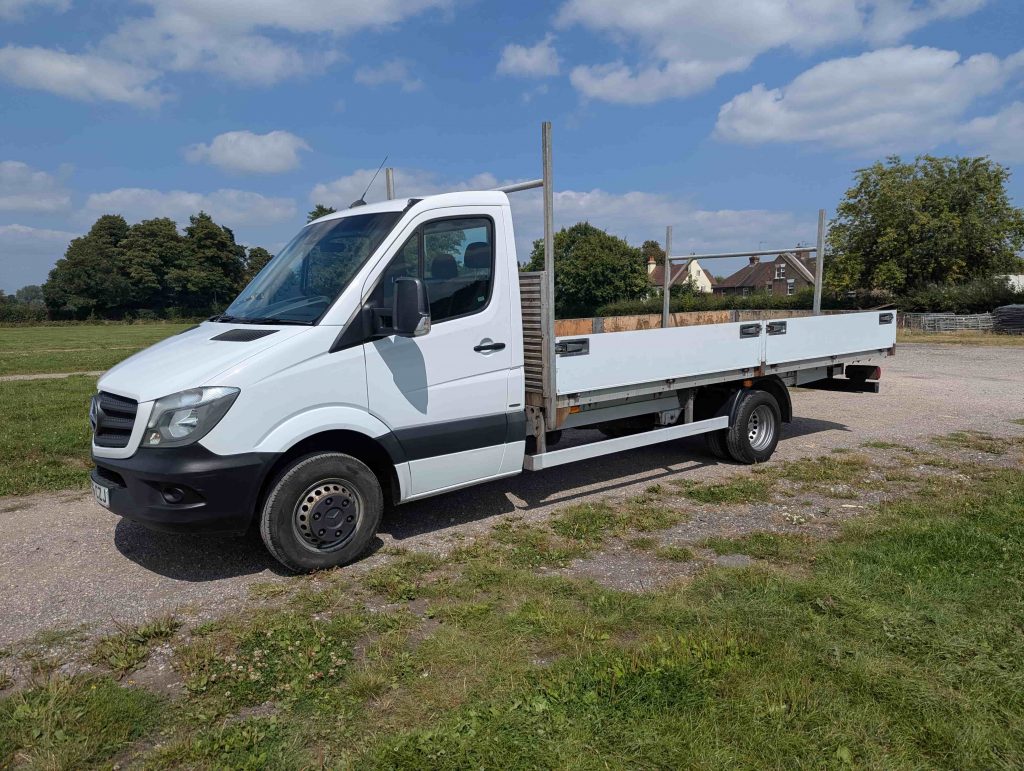
    On Sunday I cleaned the van myself, with waterless cleaner and a great heap of rags, there being no water at the storage site. I scrubbed off the dust and the green algae that had crept across the body panels in the damp. The inside needed nothing. It never has. It looked, as it always has, like something just out of the showroom and never lived in.

    The drive itself was a hundred and ten miles, up and round to a site near Bedford. The weather was balmy for the time of year, the low twenties and clear. I set off wondering whether I had chosen the right day, the route taking me around roughly half of the M25 (the great orbital motorway that encircles London in a single unbroken ring some hundred and seventeen miles round) from the M23 in the south up to the M1 in the north. I had not chosen well. The north-east quadrant was closed after an accident, so everything heading north had been swung clockwise, all of it piling onto the traffic already going that way. There were long stretches at a dead standstill. The first fifty-five miles, as far as just past Heathrow, took two hours. The second fifty-five, mostly motorway up the M1, took one. The ring road’s average speed is about twenty-five miles an hour against a seventy limit, so the whole hundred-and-seventeen-mile loop takes some five hours to drive round, and my morning sat squarely on that dismal figure.

    Three things stood out from the crawl. The first was an aircraft. As I passed Heathrow a large jet lifted off and crossed more or less overhead, perhaps a couple of hundred metres up, the sound of it deep and thundering through the cab. A long-haul twin of that size, a 777 sort of thing rather than the very largest, leaves the ground at something in the region of two hundred and fifty to three hundred tonnes. A few hundred tonnes held aloft because the air moves a little faster over the top of the wing than beneath it. I sat in stationary traffic and thought about that for a while, the plain physics of it, which is no less of a marvel for being explicable.

    The second was the road as memory. I drove this exact stretch, south to north, as a daily commute about thirty years ago, home near Gatwick to work in Kings Langley, the very same morning run I was making today. Around eighteen months of it, when I was accountant for a car sales firm. Back then they were widening the motorway from three lanes to four, and five in places. I am genuinely not sure how I managed it. We are far more resilient when we are young, and have less sense of what we are spending. There is a small irony in it, the road enlarged all those years to carry ever more traffic, and here it was today at a complete stop.

    The third was the police. At two separate points on the M25, an unmarked car threaded through the stationary lanes with its blue lights going, one a BMW M3, the other a hot version of a VW Golf. Both looked exactly like the cars you would expect to belong to someone with rather grand ideas of themselves: heavily tinted, immaculate, sitting on big wheels, built to the eye for a lap of the Nürburgring rather than for police work. How convincingly disguised these things have become struck me each time, two cars I would never have looked at twice until the lights came on.

    I reached the auction site, did the paperwork, took an Uber to Bedford station and the Thameslink home, about two and a half hours of trains. The auction follows next week.

    There is a symmetry to the day I cannot ignore, a van bought to cross the world yet scarcely driven before being given up, and given up along the very road I knew intimately three decades back. What is most honest to record, though, is how little I felt as I handed it over. I never bonded with it. I want to be fair: it is not a bad van. It is a genuinely good example, everything working as it should, every control precise and clean. But it always felt like just a van, and nothing ever formed between us. The contrast is with Morrison, which has real character, a more physical thing to drive, noisier, harsher, given to wallowing on its great tyres and raised suspension. You always know when you have driven Morrison. Today I drove a hundred and ten miles to part with a vehicle I had owned for two years, and felt no pang at all, and that absence is the truest thing I can set down about the day.

  • The Van That Never Left (part 2)- Out of Sight

    The mileage tells the truth more plainly than I could. A hundred and twenty-one thousand when I bought it; a hundred and twenty-two now. A thousand miles in just under three years, and a good chunk of those will be today.

    I brought it home on the first of July, near enough two years ago, in the same state of excitement I had carried back from Germany. It promptly took over the driveway. It blocked the garage, made a nuisance of itself for ordinary daily use, and stood there far larger than the life around it. I measured the whole chassis end to end and built it up in CAD, and then arranged storage elsewhere simply to have our drive back.

    After that I kept at the CAD in the evenings, working through the habitation box, how it might mount, how the living space would divide. The mounting was the part that weighed most. A ladder-frame truck chassis is meant to flex and twist along its length as the wheels ride over rough ground; that is not a fault, it is the design working. Bolt a rigid box straight onto a frame that moves like that and it will tear at its fixings or crack apart over a season or two. The accepted answer is a torsion-free subframe, often a three-point arrangement, which lets the chassis twist beneath the box while the box stays largely unstressed. I spent a great many evenings turning that problem over, and part of why getting it right felt so heavy was that there is no casual version of it.

    And yet it never felt right. I could not have told you why. I would go back to the model, move things about, and never once arrive at the quiet certainty of that’s the one. Time passed. The van sat in the storage compound gathering dust, out of sight and, soon enough, out of mind. I had to put it through its MOT twice and have it serviced once over those years, and even those small duties were awkward. At over three and a half tonnes the thing counts as a heavy goods vehicle, so it needs a specialist MOT test station, and there are few of those, generally booked weeks ahead. Servicing was easier in principle, since any garage may service it, but at close to nine metres long very few garages would take it through their doors.

    Two things slowly changed my mind, though I did not feel them as a turning at the time. At Allrad in 2025, our second visit, we went round deliberately looking at the smaller vehicles and at the Bruder off-road caravans, asking ourselves what we genuinely needed and how little space it might actually take. Then, later in 2025, we spent a fortnight in a small coach-built camper in Portugal, and we came away thinking that even that had been larger than we needed, given a bit of discipline in the planning. That was the start of the search for the new vehicle, the one we now call Morrison. The dropside, meanwhile, went on sitting unused, immaculate inside because it had never once been put to any purpose.

    What finally moved it was not a fresh insight. It was the insurance and tax coming up for renewal. That administrative nudge brought the van back to mind, and I decided there and then to enter it into a commercial auction, which takes place next week.

    I have been turning over what to take from all this. The honest version is unflattering. A vehicle bought to cross the world covered about a thousand miles in two years, sat in a compound, and quietly cost me specialist test bookings, the hunt for a garage long enough, and tax and insurance ticking over month after month for a thing I never saw. The deeper lesson is the one about being out of sight. Once it was stored away the problem stopped nagging at me, but it did not go away; it simply persisted, unsolved, for years. The right order of priorities would have had me face the thing that plainly was not working, rather than let distance and inertia decide it for me. I named the conflict only in hindsight, that pull between a big box built for developed-world comfort and a wish to go light and far, and even now I hold the naming of it loosely.

  • The Van That Never Left (part 1)- The Shape of the Thing

    The van (not Morrison) went off to auction today, and the drive up gave me the better part of three hours to think about how I came to own it at all. So I will set the beginning down first, while the whole shape of the thing is in my head.

    It began, properly, more than two years before I ever bought a vehicle. There was a plan, an overland tour that would take us right across the world, and for a long time it lived only as reading, calculation and argument with myself and then discussed with Ochi. Then in 2024 we went for the first time to Abenteuer & Allrad at Bad Kissingen, the great off-road and expedition gathering, around two hundred and fifty exhibitors spread across the ground with everything from roof tents and cookers to vehicles the size of small houses. We gave it two and a half days. We climbed inside as many builds as would let us, talked to the people who make them, and learned more in those few days than in the previous year of reading.

    The spread of what was there has stayed with me. At the modest end, Toyota pickups carrying a compact living box on the back, or Ineos Grenadiers fitted out with storage, a few pull-out fittings and a roof tent. At the other, six-wheeled all-wheel-drive monsters with four-wheel steering, twenty tonnes and more, and a handful of eight-wheeled things that looked built to cross a continent without noticing it was there. Walking between the two extremes did most of our deciding for us.

    I came home full of it and went straight to the classifieds. Within a short while I had found what looked ideal: a one-owner 2016 Sprinter 516 dropside, extra-long wheelbase, full service history, a hundred and twenty-one thousand miles on it. I bought it.

    The design brief in my head was by then quite firm. We did not want one of the fifteen-tonne-plus luxury expedition trucks. They are magnificent, but we wanted to take narrow mountain passes as well as open country, and I wanted to be able to mend the thing myself in a field if it came to that. Changing a wheel on one of the giants means wrestling something close to or over a hundred kilograms; a single military-pattern tyre, a 395/85 R20, is around ninety-five to a hundred kilograms before you even add the rim. That just did not seem like any fun at the roadside in the middle of nowhere. So I set a ceiling of seven and a half tonnes and meant to stay under it.

    Against that, we wanted the comforts of home, and comfort costs both volume and weight. I had a target habitation box of roughly five and a half metres by two point two by two point two, divided properly into kitchen, shower room, bedroom and living room, with a garage at the back for bicycles, spares and tools. A washing machine. Air conditioning. Working from those, I reckoned on at least two hundred and fifty litres of water, the washing machine being a thirsty thing, and around fifteen kilowatt-hours of stored energy. The box itself I meant to build in composite throughout, carbon fibre and glass fibre according to where each belonged, and bring in at about two to two and a half tonnes.

    The dropside made sense for a reason that seemed obvious once I had it. A dropside body is the easiest of all to strip away, leaving the chassis clean and exposed for a separate habitation box to be mounted on it. The extra-long wheelbase I chose simply because, at the time, I thought we needed a large box to live in.

    On paper it was coherent. I had thought it through honestly and the numbers held together. Sitting here now, I can see the seed of the later trouble sitting quietly inside that coherence: a big box, sized for living the way one lives in a comfortable house, set against a wish to travel light and travel far. I did not see it then. I see it now, though I am not yet sure I have fully made my peace with it.

  • 4 June 2026, The Abenteuer & Allrad show, Bad Kissingen

    Breakfast from eight, and a wide spread to choose from. The bacon was the surprise: cooked properly, crisp without a film of grease on the plate, which is rare when a kitchen is feeding a full dining room at once. I took the cooked breakfast, a couple of pastries afterwards and coffee. Ochi had the cooked breakfast with fresh fruit, and was offered hot almond milk for her coffee, a small courtesy that pleased her.

    Ten minutes by road to Bad Kissingen. We arrived early enough to take a place on the hard standing, of which there are only about a hundred. After that, cars are sent onto the grass, and the recent showers had left it too soft for the old vehicle, so the early start earned its keep. The show occupies a nature reserve, and movement on and off the ground is tightly controlled for that reason. By my reckoning the event has grown a great deal in both exhibitors and visitors across the twenty-odd years it has run.

    The queue for the event coaches was already fairly long when we joined it, but far better managed than in the previous two years, when it had been a scramble with no order to it. This time there was a proper queue. The first coach came after about a quarter of an hour and we boarded the fifth, a ten-minute ride to the gates. They opened at ten; we were through at a little after a quarter past. Most people begin at the gates and work inward, so that end was crowded, and we went straight across to the far side and worked back towards the exit. We spent some five hours on the ground.

    The first stand of any interest belonged to a firm (camping-pioneers) specialising in roof-top tents and in-vehicle table mountings, neither of which we want. What caught my eye instead were their own folding camping chairs, light and strong and genuinely comfortable, and a set of bamboo folding stools and a table of the Qeedo make. I flagged both for later thought rather than purchase.

    Then to the first of the day’s real targets (Clesana), a maker of toilets that seal waste into a high-barrier bag for disposal, with no water and no chemicals involved. The company comes out of medical hygiene and moved into travel only a couple of years ago, first with a built-in model and then, this January, with a portable version. We had seen the portable one briefly at the Caravan Salon in Düsseldorf last year and wanted longer with it. It suits us almost exactly: small, light, battery-powered, easily moved. They were not selling on the day. The distributor sits in Scotland, and we were told that a trader near the gates was stocking them.

    Directly opposite stood a water-treatment specialist (Purion), and water treatment was one of the chief reasons for the trip. They offer flexible, hard-wearing components for keeping stored water clean and disinfected without chemicals: filter housings that take standard cartridge sizes obtainable anywhere in the world, together with a UV-C lamp and driver to cycle the tank. A strong candidate for the build, and one I left thinking well of.

    The find of the day was not on my list at all. A maker of recirculating showers (Dauer Shower), which solves a problem I have turned over for a couple of years. In a small van lived in full time, every litre of water must be carried, and a litre weighs a kilogram and fills a ten-centimetre cube. That is real weight and real volume, both competing with everything else aboard, and a shower is among the worst offenders for getting through water. The obstacle to recycling shower water has always been soap, which is awkward to separate, so existing systems tend to be either large, heavy and power-hungry or else they eat filters, neither acceptable in a van this size. Their answer is a hybrid. You shower in circulation mode for as long as you like, the water kept hot and clean through an easy-clean, long-life filter and using only a couple of litres; then you switch off, soap up, and run a short burst in fresh-water mode straight to the grey tank, so there is no soap to extract from the recirculated water at all. The maker quotes around five litres and 0.15 kWh per shower; my own guess is six to ten, set against the much heavier draw of an ordinary shower. I will write to them once we are home.

    Energy storage next. The living side of the vehicle has long been held back by voltage: the usual twelve volts demands thick, heavy cable for anything that draws hard, which is to say cooling, heating and cooking. I have wanted to move to forty-eight volts for some time, but the kit has been scarce and dear. An Australian (Egon) firm announced a forty-eight-volt architecture in prototype last year and brought the first version to general sale this month, so forty-eight-volt batteries are now the thing required. This stand (Liontron) had a fifty-amp-hour forty-eight-volt unit on show, about 2.5 kWh; four in parallel would give ample capacity at roughly a hundred kilograms. Worth taking further.

    A heating make (Scheer) new to me, though my heating plan is more or less settled, showed a diesel hydronic heater that holds a blue flame even from cold start through careful control of the air-to-diesel mix, which gives a clean, soot-free burn (typically these types of devices run a yellow, inefficient flame until at full burn temperature). I need heat for the living quarters, both underfloor and blown, for hot water, and for pre-heating the engine in very cold places. This unit is larger and heavier than I had imagined, and it draws on both AC and DC, which adds complexity, but it interested me, and the person on the stand had genuine technical depth.

    The mattress question took up a good while at the stand of an Austrian maker (Flexima) of made-to-measure beds for vehicles, handmade. I want a bed left permanently made up rather than rebuilt from the seating each night. A roof-drop bed would cost too much height in a van already tall, with its raised suspension and large off-road wheels, so the plan is a bed that folds in two and stands upright at the rear when not in use. The mattress therefore has to be relatively thin, light and foldable down the middle, yet still comfortable after years of use. I tried two of theirs and found both very comfortable. The foam carries internal plastic spring elements that can be adjusted to firm or soften different zones, which I had not seen before. I spoke with Chris Schoneman, their Benelux director, and came away expecting this to be our choice. I mean to post a CAD drawing of the internal layout in a later entry.

    A British company trading (GN Espace) from Widford in Hertfordshire, with a long history of supplying the marine trade, showed induction hobs and multifunction sinks that looked very well made. Worth another conversation.

    We returned to a maker of hanging chairs of the hammock kind (Mira Art), which appealed to Ochi last year. We tried them again and liked them again. I have a suspension solution in mind already, so the difficulty is the weight and stowage of the parts rather than the chairs themselves. A luxury, to be settled last if there is capacity to spare.

    I spent time with Michael Iglhaut, whose firm (Iglhaut) converted our vehicle into the capable off-roader it is back in 2000. That connection matters for the future: access to their knowledge of the vehicle and to their own parts as things wear or break, so I am glad to be building the acquaintance.

    By the exit stood the trader we had been told about, and he had the Clesana X1 portable toilet in stock. We bought it there and then, so the van now has its toilet, the one firm purchase of the day.

    So the day’s reckoning: the toilet bought; the Austrian mattress now the likely answer for the folding rear bed. Carried forward as candidates or jobs to do are the water-treatment components, the forty-eight-volt storage to match the new architecture, the diesel heater for further investigation, the recirculating shower to be contacted from home, the British induction hob and sink for another conversation, the folding chairs and bamboo stools flagged, and the hanging chairs left to last on grounds of weight and stowage. I took no photographs as I was too focused on the exhibitors.

    Coach back to the car, the short drive to Kunzmann’s, and a look round the hotel’s spa before dinner at a quarter to seven. The local wines the hotel recommended were very good, but I failed to note their names, which I regret; I shall record tomorrow evening’s recommendations so they at least appear in the next day’s pages.